8 May 2026 · swzhouu · 5 min read
Table of contents
1st DEF CON® Singapore Hacking Conference
The inaugural 1st DEF CON® Singapore Hacking Conference (DCSG) was co-organized by DEF CON and HTX (Home Team Science and Technology Agency), with CSIT (Centre for Strategic Infocomm Technologies) as a strategic partner. It ran April 28–30, 2026 at Marina Bay Sands, alongside the Milipol TechX Summit (MTX) 2026. The event brought the full DEF CON DNA to Southeast Asia: 11 villages, 19 communities, talks, CTF competitions, and the kind of crowd that treats “attack surface” as everyday vocabulary. As a security researcher and penetration tester, I came in with two goals: absorb as much knowledge as possible, and compete in at least one CTF. Spoiler: mission accomplished on both.
Maritime Hacking Village
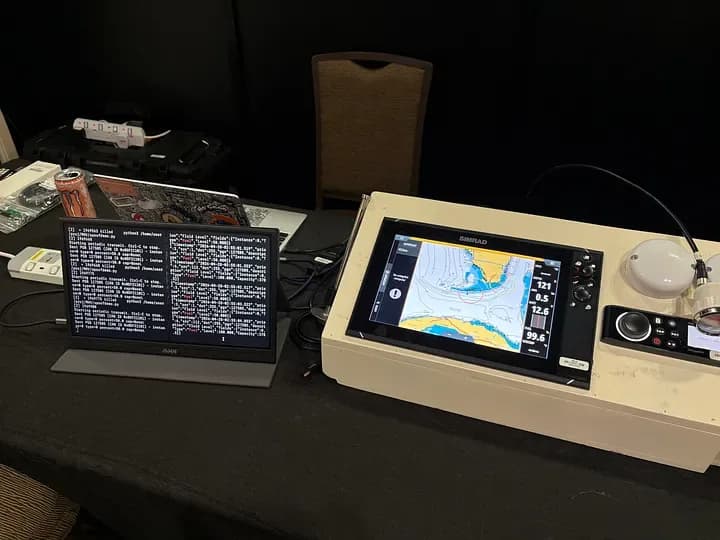
This was my main stomping ground, and where our team’s CTF run happened. The Maritime Hacking Village’s mission is straightforward: create a space for hackers, stakeholders, and policymakers to tackle the systemic cybersecurity vulnerabilities in ships, ports, and maritime communication infrastructure an often-overlooked attack surface, despite maritime infrastructure being the backbone of global trade and supply chains.
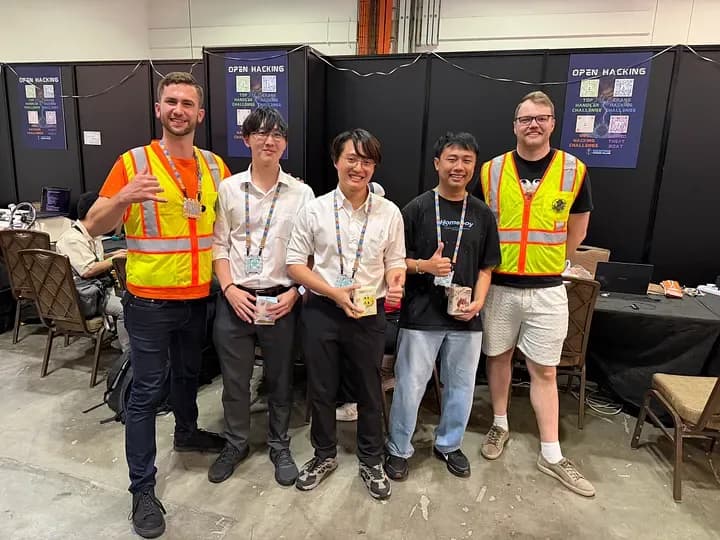
What set this CTF apart was that it actually demanded domain knowledge. These were not generic jeopardy challenges reskinned with a nautical theme. You had to think like an attacker operating in this space understanding real maritime protocols, signal behaviors, and communication systems. The other teams were sharp, and it came down to execution speed in the final stretch. We came out on top, and taking 1st place felt genuinely earned.

Aerospace Village
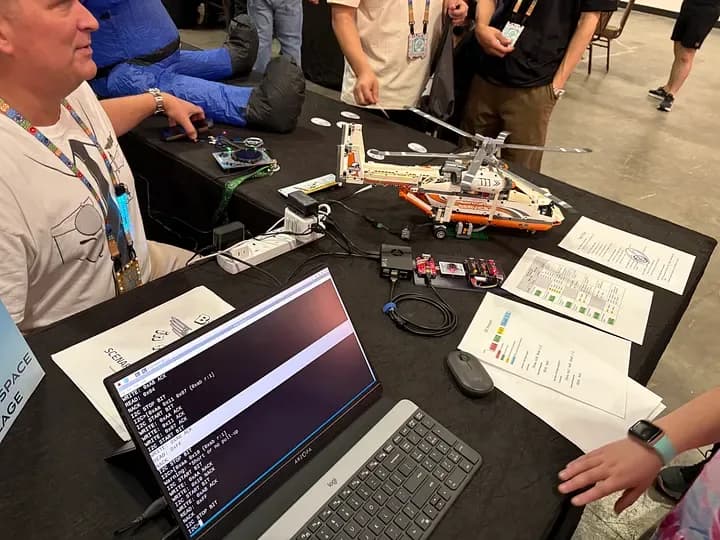
The Aerospace Village is built around a clear premise: aviation safety and cybersecurity are increasingly overlapping, and the two communities need to actually work together. At 1st DEF CON® Singapore Hacking Conference, attendees got hands-on access to drone and space systems hardware, which is a very different experience from reading about avionics security in a whitepaper. Aviation cybersecurity is a space I am increasingly paying attention to. The attack surface is enormous, the consequences of compromise are obvious, and yet it is still underrepresented in mainstream bug bounty programs. Conversations here reinforced that this is an area worth watching.
Biohacking Village
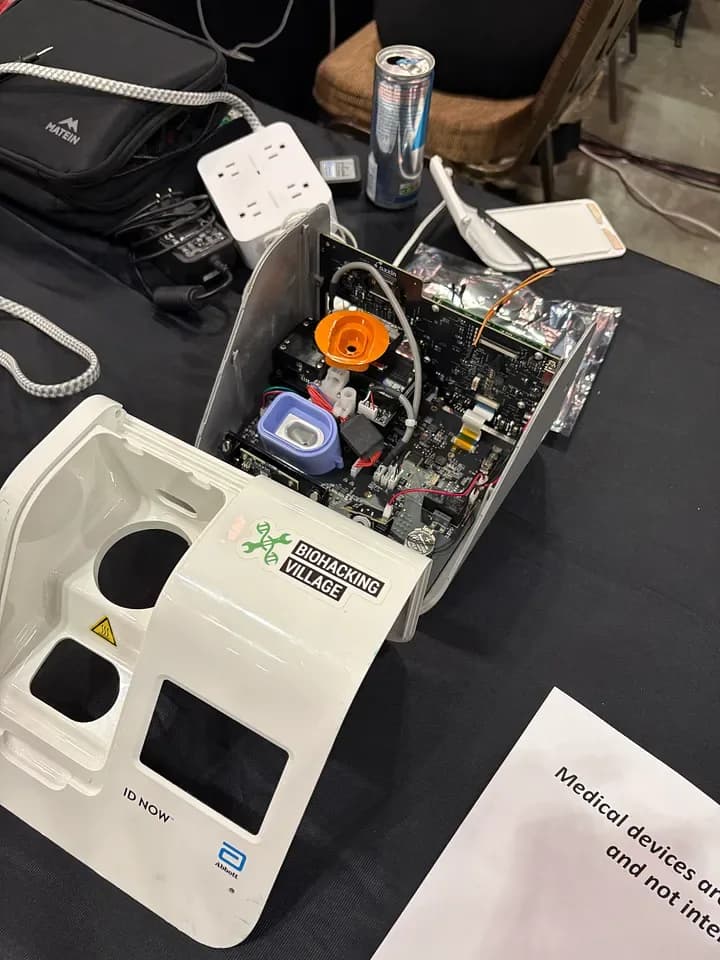
Medical device security is one of those topics that sounds like a niche academic curiosity until you remember that these devices affect real patient outcomes. The Biohacking Village at 1st DEF CON® Singapore Hacking Conference brought healthcare cybersecurity hands-on, with infusion pumps, wearables, and diagnostic equipment that participants could actually test. The focus was on understanding how medical devices work, the vulnerabilities they carry, and why securing them matters for patient safety. These are real attack surfaces, often running outdated software stacks, and the security research community needs more people looking at them.
ICS Village

Industrial Control Systems (ICS) and SCADA security is where theoretical becomes terrifyingly real. The ICS Village brought actual hardware to the floor: PLCs, HMIs, RTUs, and actuators in a simulated environment spanning different industrial sectors. Participants could connect their own laptops to assess these ICS devices using common security scanners and network sniffers to capture industrial protocol traffic. Seeing how these systems behave under active assessment, on real hardware, changes how you think about critical infrastructure risk. Worth noting too: the ICS Village collaborated with the Biohacking Village to demonstrate how industrial control systems intersect with healthcare, which is a combination not many people think about until they do.
Oblivion Token: M365 Conditional Access Policy Bypass OST (Offensive Tooling)
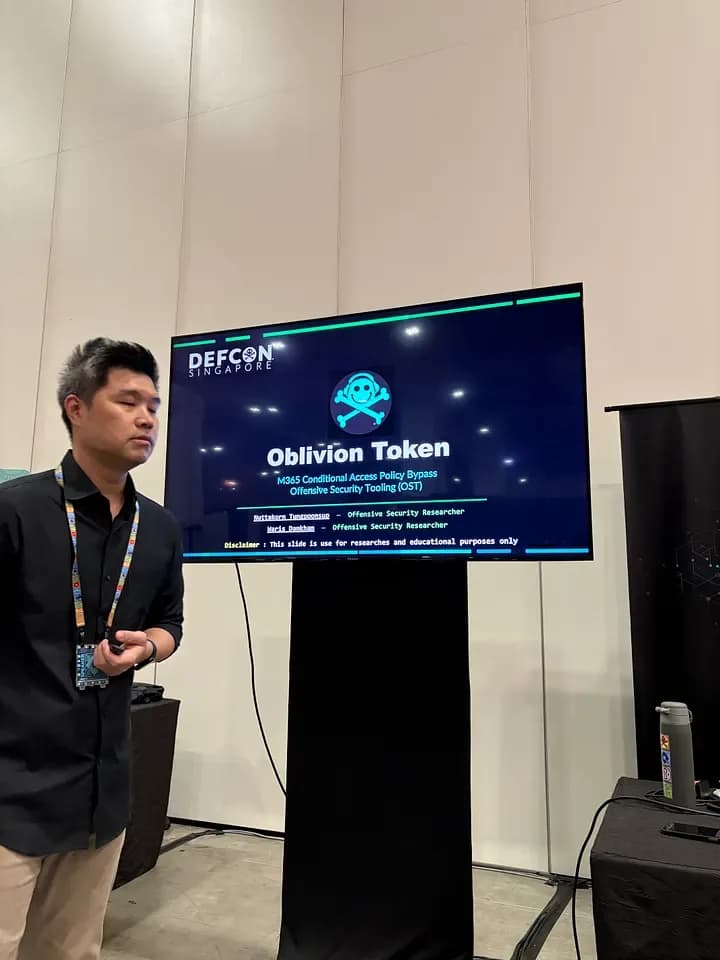
This was the talk I was most curious about walking in, and it delivered.
Oblivion Token (built by Vanitas and Mittcheng) is an offensive security tool that makes Microsoft 365 Conditional Access Policy (CAP) bypass testing practical, repeatable, and scriptable. The tool issues legitimate OIDC ID tokens and OAuth2 access tokens that are directly consumable by Microsoft Graph API endpoints, integrating with Microsoft Graph PowerShell and GraphRunner for post-exploitation automation against M365 tenants.
The core problem it exploits is that CAP enforcement has edge cases when applications request only basic OIDC scopes like openid, profile, or email, or limited directory scopes like User.Read. In these scenarios, the authentication request does not target a specific resource, so the policy can fail to evaluate correctly, meaning a user could authenticate without satisfying MFA or device compliance checks, even when the policy is configured to protect all resources.
For red teamers, the practical implication is significant: Conditional Access is often the last layer standing between an attacker with valid credentials and full tenant access to Teams, SharePoint, Exchange, and the rest of the M365 stack. It is worth noting Microsoft has been rolling out enforcement changes to close some of these gaps, with the rollout now beginning May 13, 2026 (originally scheduled for March 27, 2026, per Message Center notice MC1223829), so the cat-and-mouse continues. But this talk was a good reminder that policy coverage and policy enforcement are two different things, and you cannot assume your CAP is doing what you think it is doing without actually testing it.
Miscellaneous
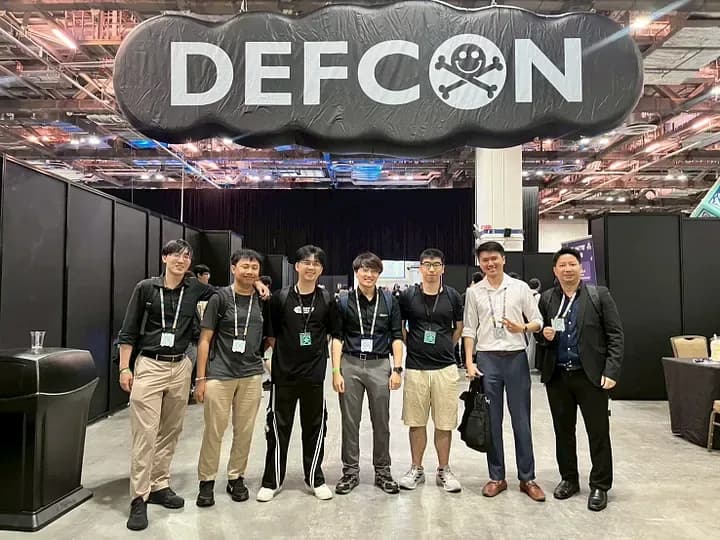
The 1st DEF CON® Singapore Hacking Conference exceeded what I expected from an inaugural event. 11 villages, 19 communities, real hardware, real challenges, and a CTF quality high enough that winning actually felt meaningful. As a penetration tester and vulnerability researcher, the biggest value was not just the technical content. It was the reminder of how many attack surfaces exist outside the usual scope of most commercial engagements: maritime systems, avionics, medical devices, PLCs. These are all areas where the security research community is thinner on the ground than it should be. I came back with new ideas, new contacts, and a 1st place trophy. Not a bad few days in Singapore.
Resources
DEF CON® Singapore Hacking Conference — defcon.org
DCSG - Maritime Hacking Village — maritimehackingvillage.com
Conclusion
In summary, 1st DEF CON® Singapore Hacking Conference brought together hackers worldwide who share a passion for emerging techniques, including 0-day exploits. It provided a wealth of valuable information through discussions with fellow researchers. As a penetration tester, it has opened my eyes to numerous new ideas for my research.
Special Thanks
Lastly, I met many talented people in 1st DEF CON® Singapore Hacking Conference. I would not have completed it without your support. Thank you to Secure D Global who gave me the opportunity to join this event!
Aye Aye, Captain.